Building a Mars Rover
Design and development of an autonomous Mars Rover for international robotics challenges.
- This team project involved the design and fabrication of a fully functional Mars Rover prototype capable of autonomous navigation, remote operation, and terrain adaptability.
- It was part of the University Rover Challenge (URC) 2015, Utah, USA, and later the European Rover Challenge (ERC) 2016, Jasionka, Poland — both focused on advancing planetary exploration robotics.
🚀 Overview
Between 2015 and 2017, our interdisciplinary team at the Shahjalal University of Science & Technology (SUST) developed a rover integrating mechanical, electronic, and control subsystems for rough Martian terrain.
I contributed primarily to:
- Motor driving circuitry for precision wheel and arm control
- Power distribution and sensor integration (relays and wiring); soldering.
- Mechanical chassis development for stable motion on variable slopes; used heavy cutting, drilling and grinding tools.
- Testing and debugging for field performance and remote operation
🎥 Project Demonstration
Demonstration of the SUST Mars Rover prototype in motion and obstacle negotiation.
🔧 Fabrication & Team
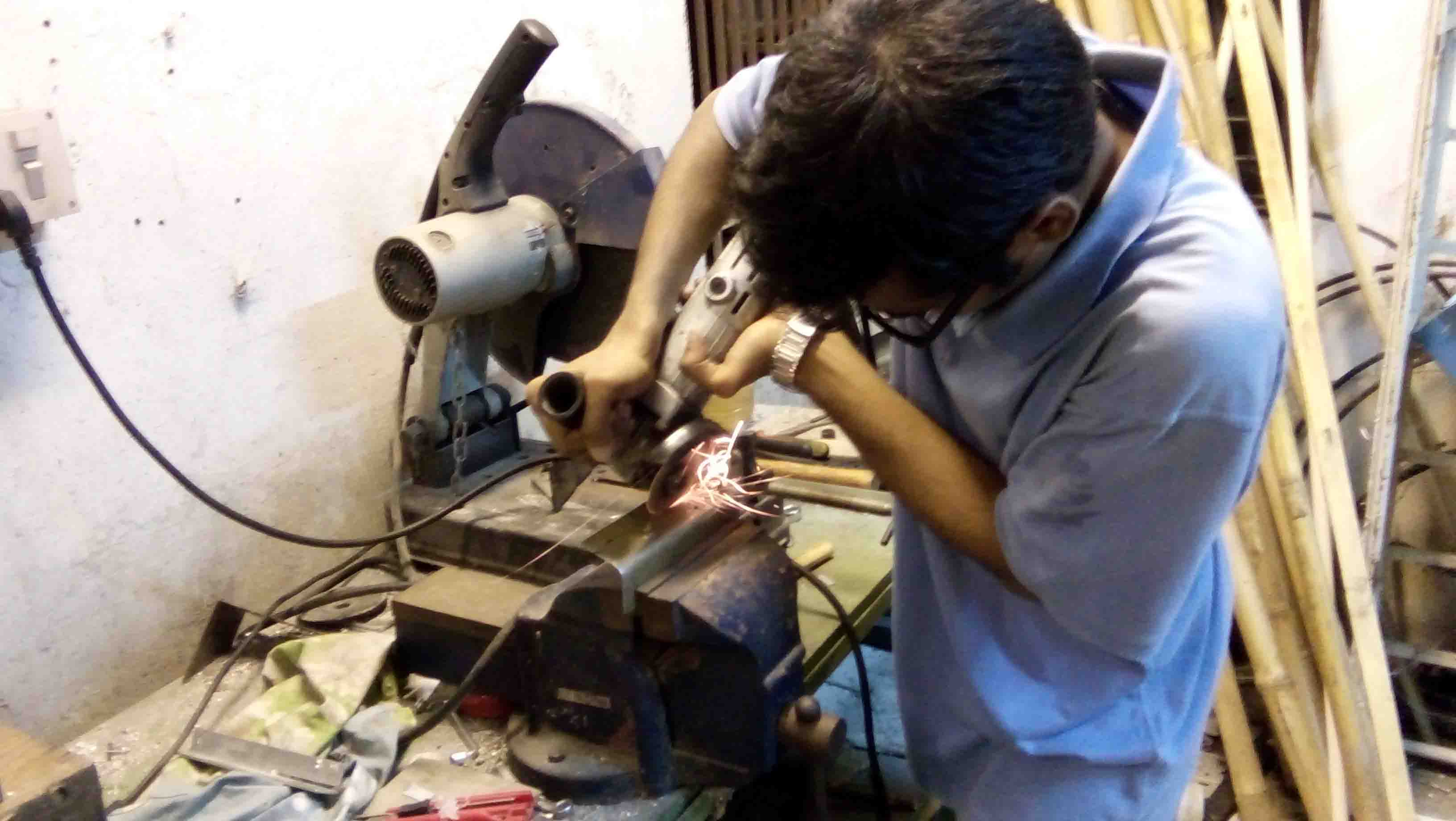
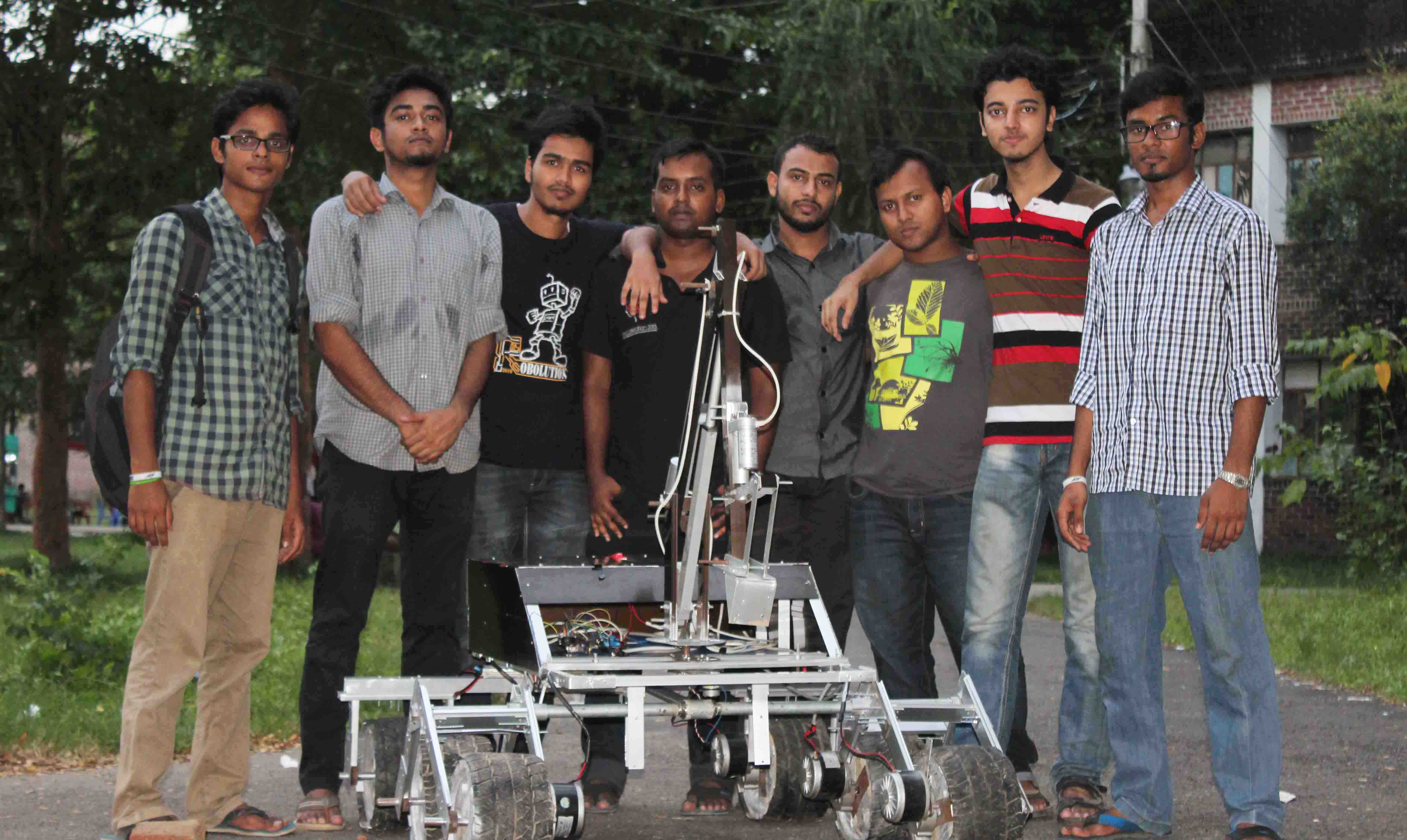
Top: Working on the rover body using a metal grinding machine. Bottom: The full SUST Mars Rover team with the completed rover before international competition.
🧭 Competition & Achievements
- University Rover Challenge 2015, Utah, USA – Qualified for Critical Design Review (CDR) stage
- European Rover Challenge 2016, Poland – Selected for final competition round
Building a Mars Rover helped us better understand how to bring together control systems, mechanics, and real-world testing.
🧩 Funding & Support
This project was partially supported by the Shahjalal University of Science & Technology Research Center (SUSTRC), Sylhet, Bangladesh.