Superconducting Nb & Cu Resonator/CPW Fabrication
Microfabrication of superconducting Nb resonators/ CPWs for cryogenic measurements and Cu resonators/ CPWs for room-temperature testing.
Overview
For multiple projects I have done the fabrication and characterization of:
- Nb resonators and CPWs for low-temperature, cryogenic experiments
- Cu resonators and CPWs for room-temperature S-parameter testing
The key components of this work:
- Electroplating Indium (In) bump structures on resonator & coplanar waveguide (CPW) chips for spin pumping and magnetic control interfaces. Details in Electroplating.
- DC lines enabled current-controlled magnon–magnon and magnon–photon coupling in hybrid quantum systems.
- Established a repeatable fabrication workflow and validate resonator performance across temperatures and magnetic fields.
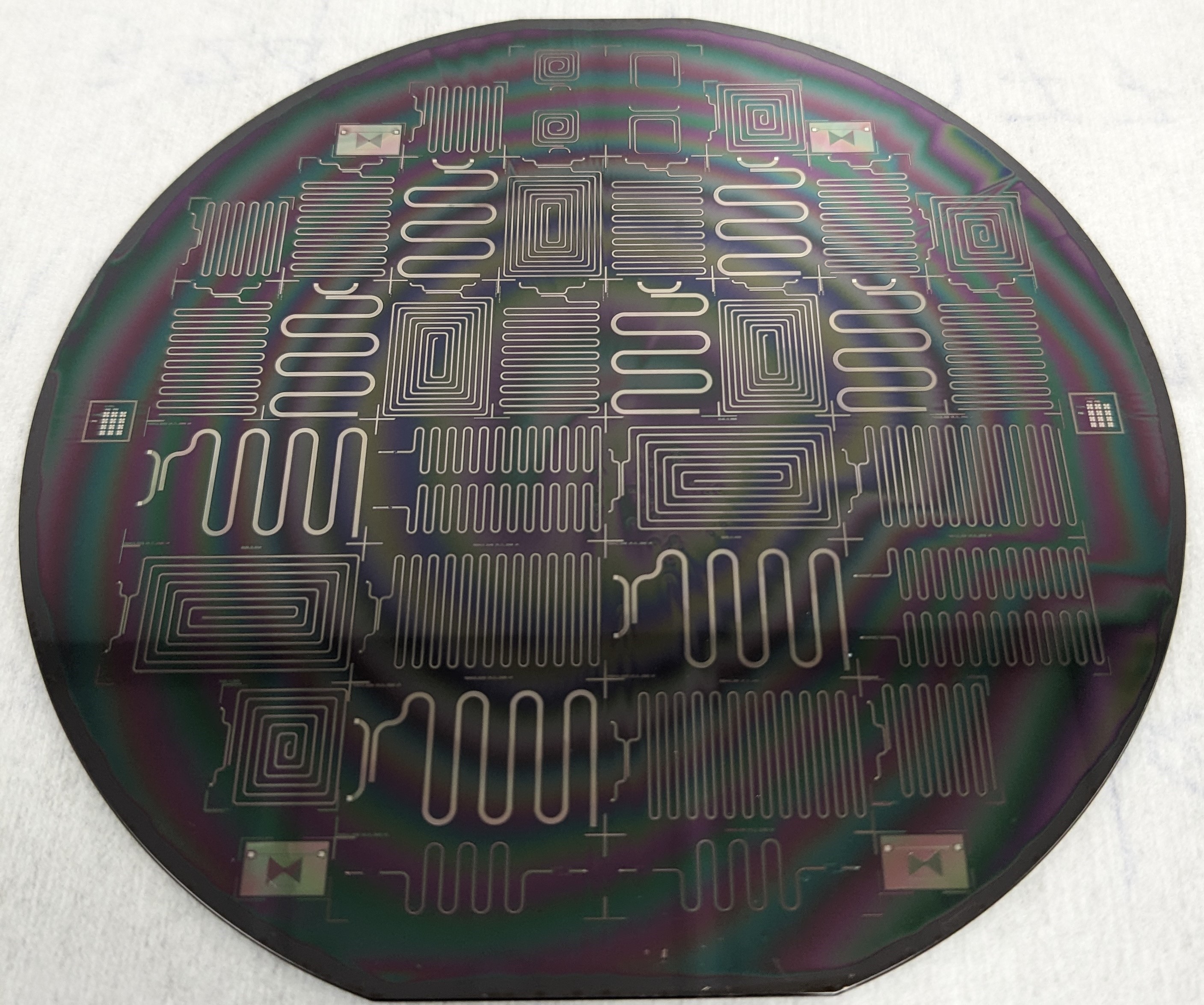
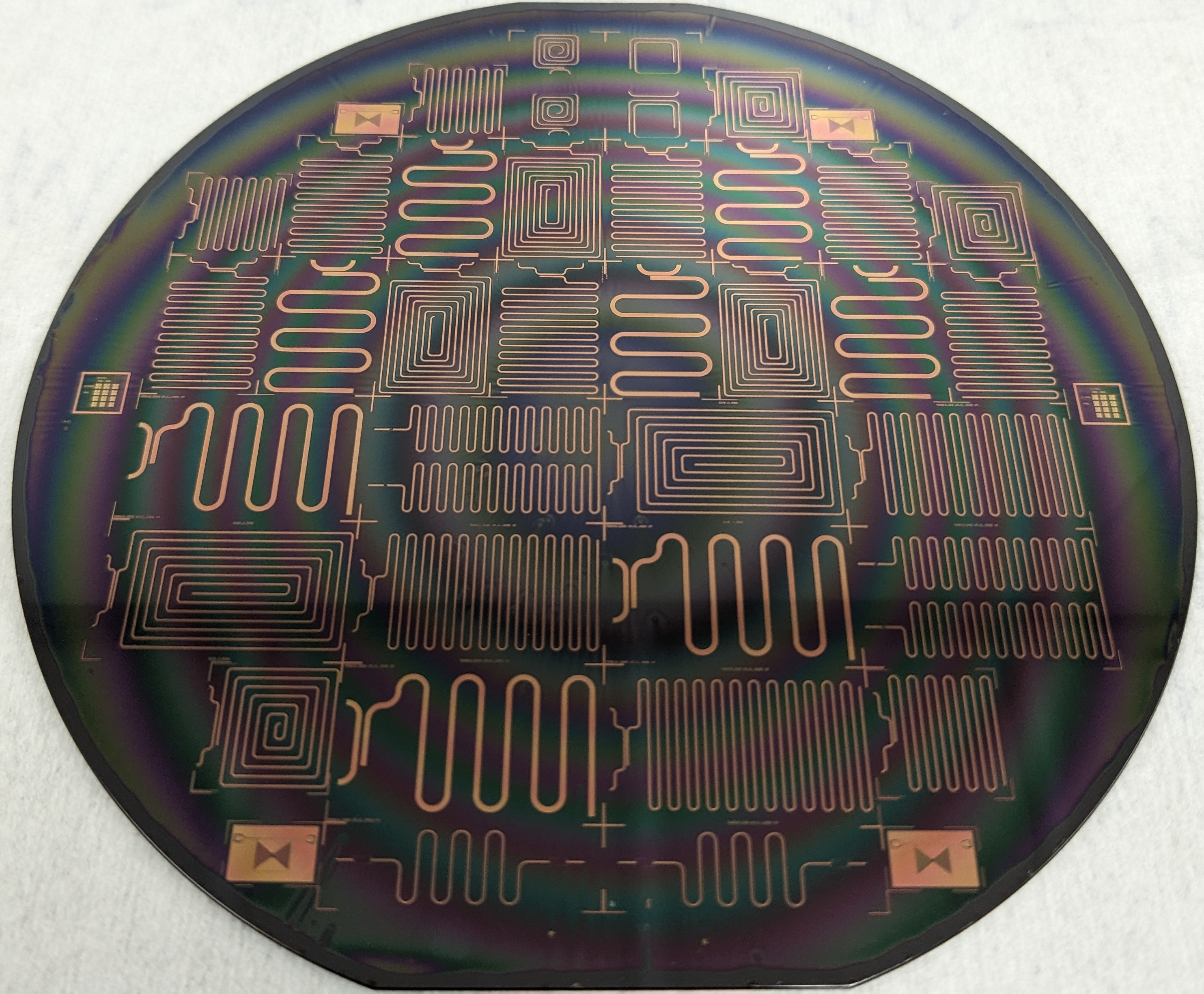
Left – Nb resonators for cryogenic testing; Right – Cu resonators for room-temperature characterization. Both have photoresist spun for dicing.
Fabrication Process
Devices were fabricated using optical lithography and thin-film deposition:
- Substrates: High-resistivity double sided polished Si wafers
- Deposition: DC sputtering of Nb (200 nm), and Cu (150 nm)
- Patterning: UV lithography, lift-off for Cu and Nb
- Geometry: Quarter-wave CPW resonators (50 Ω feedline, λ/4 open stub)
- Indium Bumps: Electroplated onto patterned trenches to create low-resistance current injection contacts for tunable coupling experiments
- Packaging: Wire-bonded to custom PCBs for VNA measurements
Measurements
Room-Temperature (Cu): S-parameter and impedance characterization using a VNA.
Low-Temperature (Nb): Cryogenic measurements of S21 and Q-factor at 1.7 K, demonstrating high-quality resonator performance and compatibility with hybrid magnonic architectures.
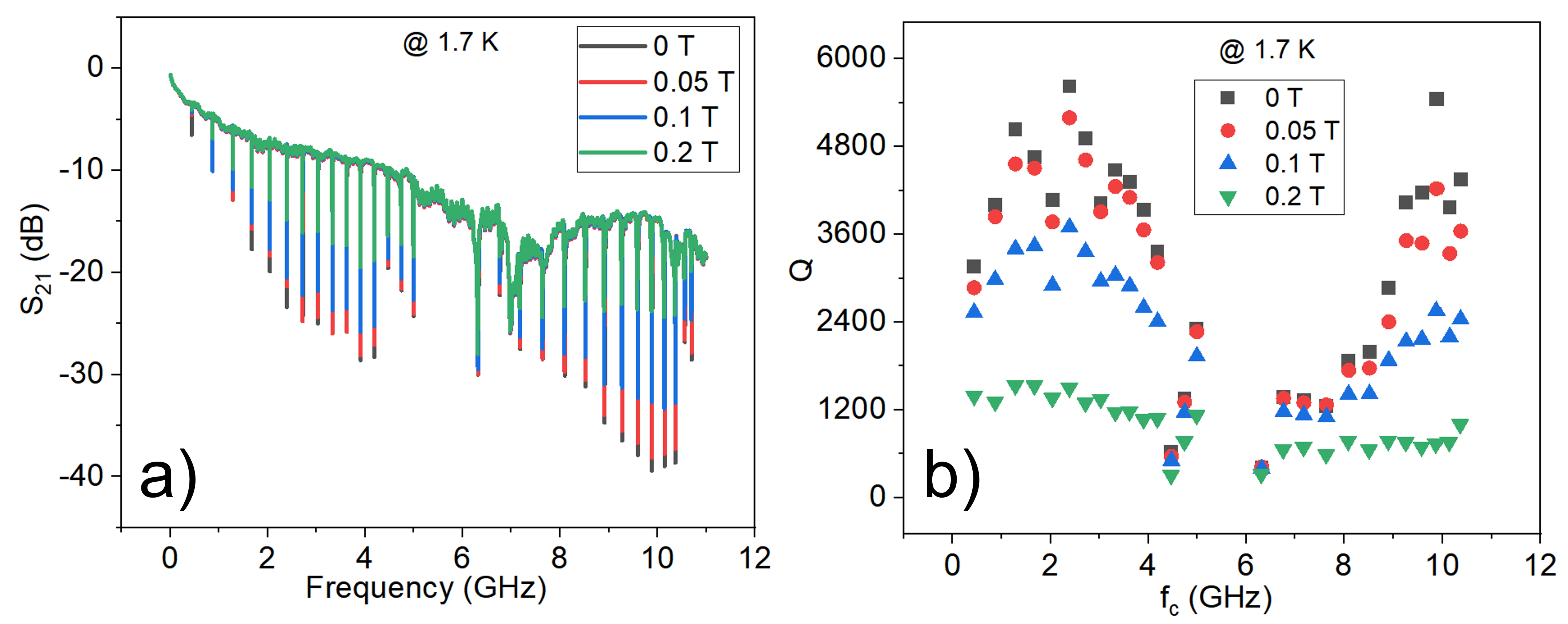
Nb resonator performing under magnetic fields measured at 1.7 K: S21 measurements (a) and corresponding Q-factors (b)
Electroplating Indium (for CPW chips)
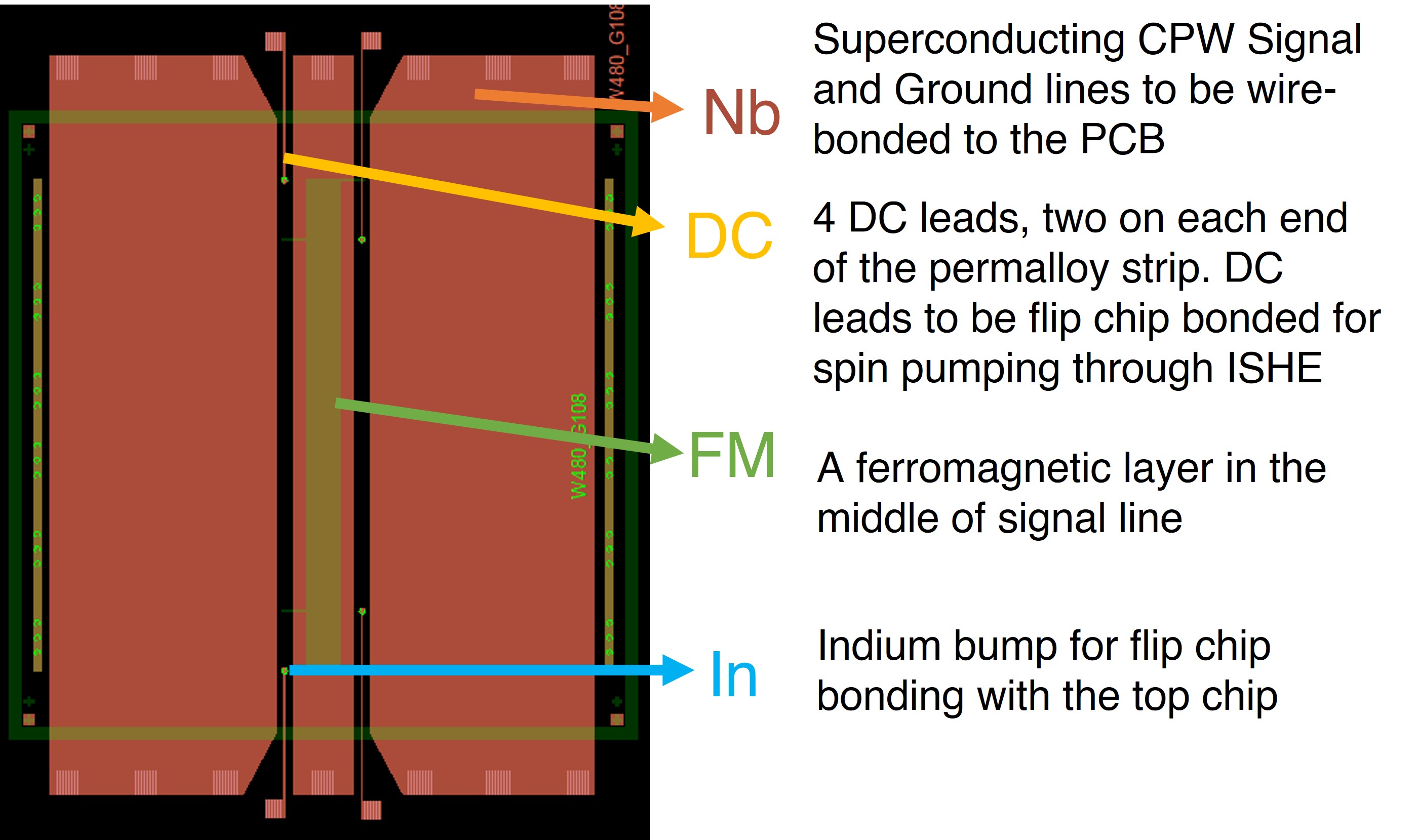
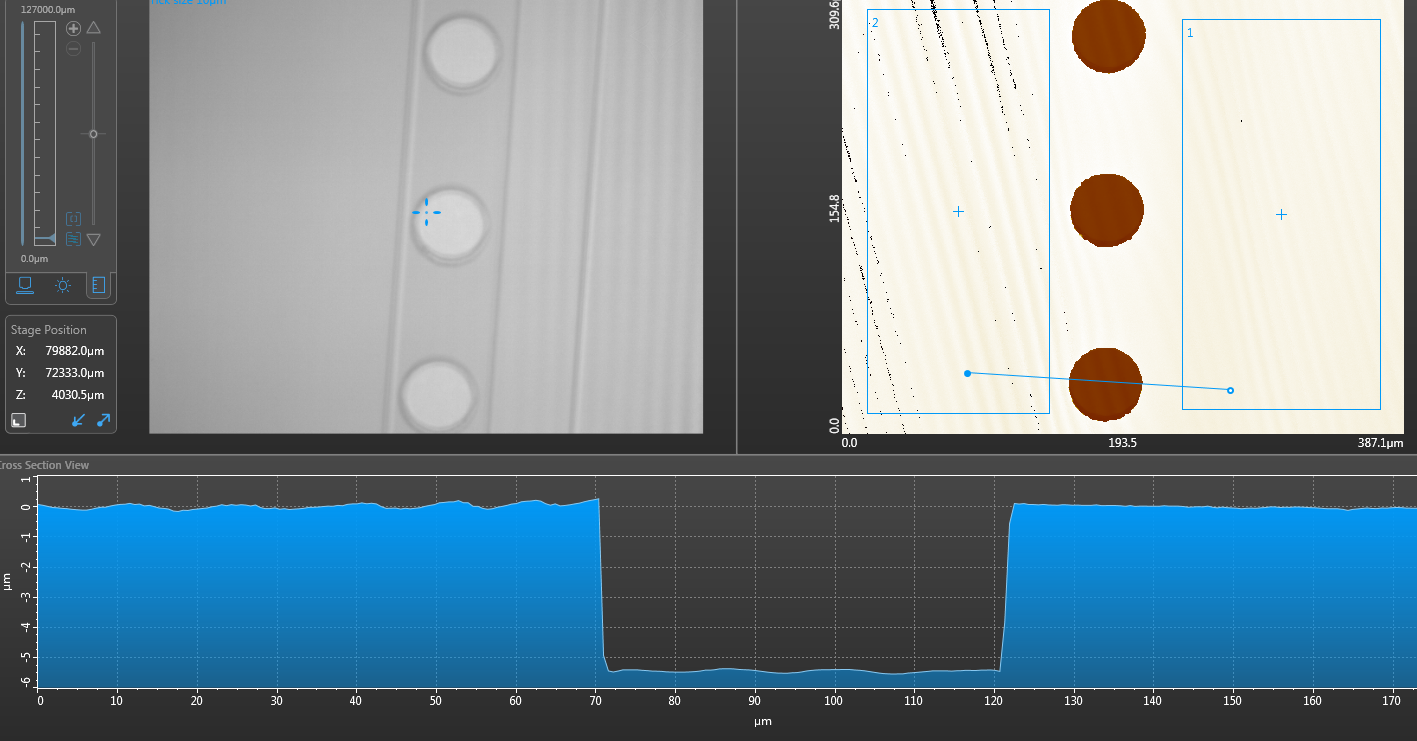
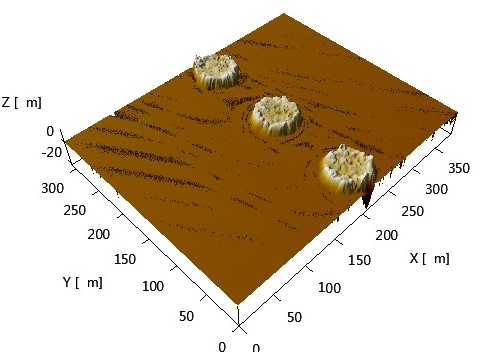
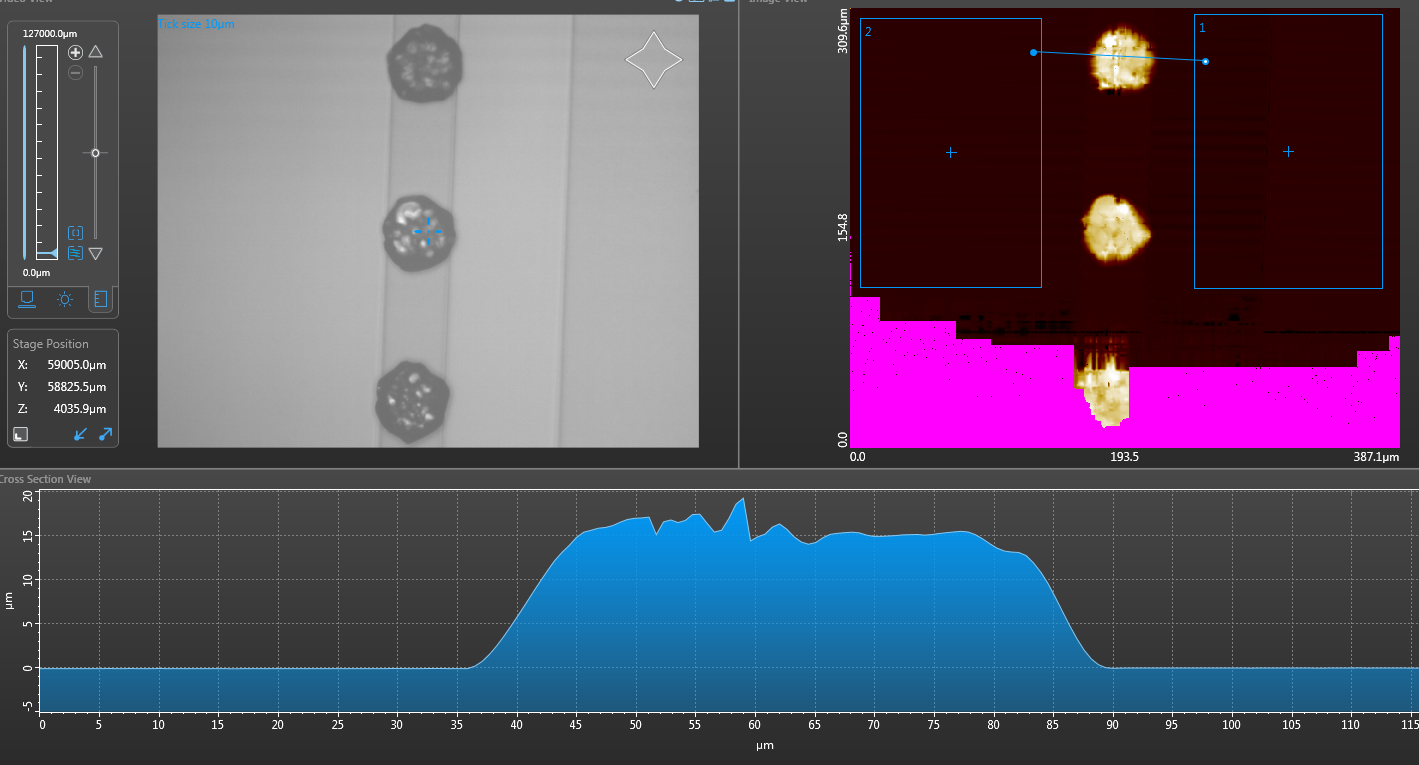
For CPW wafers: (a) CPW layout used for current-controlled magnon coupling, (b) Profilometry of In bump pattern trenches, , (c) 3D view of indium bumps, and (d) Electroplated bumps after resist stripping.
Key Outcomes
- Established a reproducible fabrication workflow for Nb and Cu resonators/CPWs
- Developed indium bump integration for current-driven magnon–magnon and magnon–photon coupling
- Verified resonator performance trends across magnetic fields
- Provided a baseline for cryogenic hybrid quantum experiments
- Integrated Microwave Simulation → Mask/ PCB Design → fabrication → measurement pipeline
Tools & Methods

- Software: Keysight ADS, KLayout, Python
- Equipment: DC sputter system, mask aligner, VNA, optical profiler, electroplating setup
- Collaboration: Supervised by Dr. Michael Hamilton, conducted at Alabama Micro/Nano Science and Technology Center